Systemic How Might We (HMW) Statement Builder
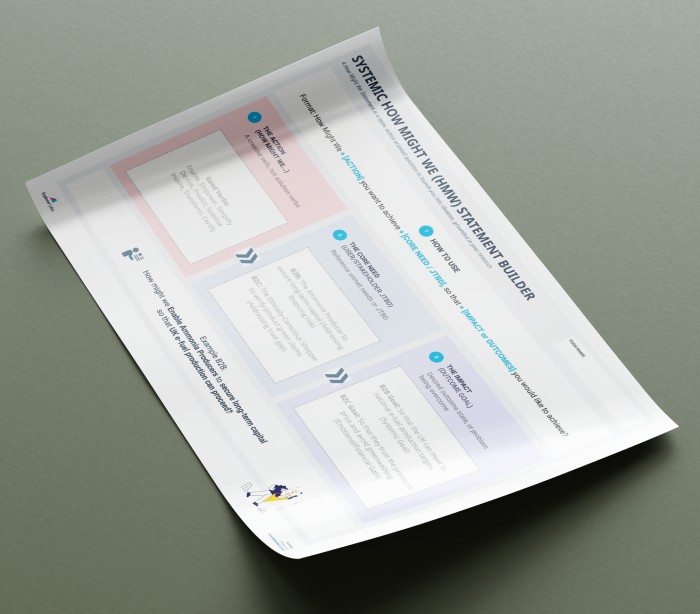
Define the action as creative verb
Define the core stakeholder needs
Define the key outcome impacts you expect to see
What does it do?
A tool designed to bridge the gap between deep research and creative problem-solving. It helps teams frame challenges as solvable, ambitious questions that invite diverse solutions while remaining grounded in the specific needs of users or the broader system.
- Frame Better Questions: Move away from “solution-verbs” toward creative actions that open up the design space.
- Ground Ideation in Reality: Ensure every brainstorm is tied to a core unmet need or a specific “Job to Be Done” (JTBD).
- Target Systemic Impact: Define clear outcome goals, whether they are emotional gains for an individual or large-scale targets for a national system.
- Align Stakeholders: Create a clear, shared focus for innovation teams before they begin generating ideas.
Explorer Labs respects your privacy. We will only use your information to send your download and future updates on sustainable business innovation. You can manage your preferences at any time. Please see our Privacy Policy.

Also available on Miro for remote team collaboration
When to use it
This tool is the essential “starting gun” for any ideation session. It should be used:
- After Research and Synthesis: Once you have identified key pain points or JTBD and need to translate them into creative prompts.
- Before Brainstorming: To ensure the team is solving the right problem rather than jumping straight to obvious solutions.
- When Strategy Stalls: If a project feels too narrow or too broad, use the builder to find the “Goldilocks zone” of a well-framed challenge.
- During Policy or Service Design: To align systemic goals (like national targets) with the immediate needs of actors in the system.
How to use it
STEP 1
Define THE ACTION: Choose a creative verb that describes what you want to achieve without prescribing a solution. Instead of “Build an app,” use verbs like Enable, Empower, De-risk, or Transform.
STEP 2
Identify THE CORE NEED: Reference the user or stakeholder’s unmet need or JTBD. For example, “The Ethically-Conscious Shopper to verify product green claims.”
STEP 3
Specify THE IMPACT: State the desired outcome or the problem being overcome. This could be a B2C goal like “avoiding greenwashing” or a systemic B2B goal like “meeting national e-fuel production targets.”
STEP 4
Assemble and Iterate: Combine these elements into a single statement. If the question feels too easy to answer, make it more ambitious; if it feels impossible, narrow the focus.
Let’s Decode Your Complexity!
STRATEGIC INTERVENTIONS FOR SUSTAINABLE GROWTH
Ready to turn systemic challenges into design opportunities? Let’s schedule a brief session to align on your innovation goals and map out a path toward high-impact change