Systemic Intervention Design Card
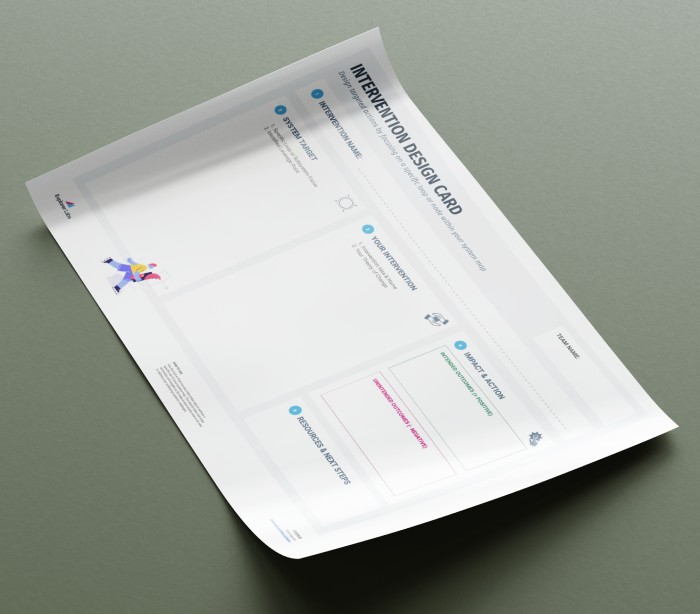
Define your system loop target
Define your specific intervention design and type
Assess the intended and unintended consequences
Define your key resource needs and next steps
What does it do?
The Systemic Intervention Design Card is a practical tool used to flesh out high-leverage ideas into actionable projects. It forces teams to look at a specific part of their “System Map”—such as a specific loop or subsystem—and define exactly how an intervention will change its behaviour.
- Target Leverage Points: Focus your efforts on specific nodes or loops identified in your system analysis.
- Define Your Theory of Change: Articulate the logical path between your action and the intended systemic shift.
- Anticipate the “Side Effects”: Proactively identify unintended negative outcomes to build more resilient solutions.
- Operationalize Strategy: Transition from abstract ideas to concrete next steps, including required resources and immediate actions.
Explorer Labs respects your privacy. We will only use your information to send your download and future updates on sustainable business innovation. You can manage your preferences at any time. Please see our Privacy Policy.

Also available on Miro for remote team collaboration
When to use it
This tool should be used once you have identified where to intervene in a system but need to decide what specifically to do. Use it when:
- Transitioning from Analysis to Design: You have a system map and need to design targeted actions to address underlying challenges.
- Evaluating Intervention Ideas: You need to compare different ideas based on their intended positive outcomes versus potential negative risks.
- Planning Implementation: You are ready to assign team names, define resources, and set clear next steps for a project.
- Stakeholder Reviews: You need a concise, one-page summary of an intervention to pitch to partners or decision-makers.
How to use it
STEP 1
Identify the System Target: Name the specific loop, subsystem, or leverage point your intervention is targeting.
STEP 2
Name the Intervention: Give your idea a clear name and outline the “Theory of Change”—how exactly your action leads to the goal.
STEP 3
Map the Impact: List the intended positive outcomes (the change you want to see) and the unintended negative outcomes (the risks you need to mitigate).
STEP 4
Define Next Steps: Identify the resources required and the immediate actions the team needs to take to move the project forward.
STEP 5
Iterate: Use the tool to “flesh out” multiple intervention types until the team knows exactly what to do next.
Let’s Decode Your Complexity!
STRATEGIC INTERVENTIONS FOR SUSTAINABLE GROWTH
Ready to turn systemic challenges into design opportunities? Let’s schedule a brief session to align on your innovation goals and map out a path toward high-impact change