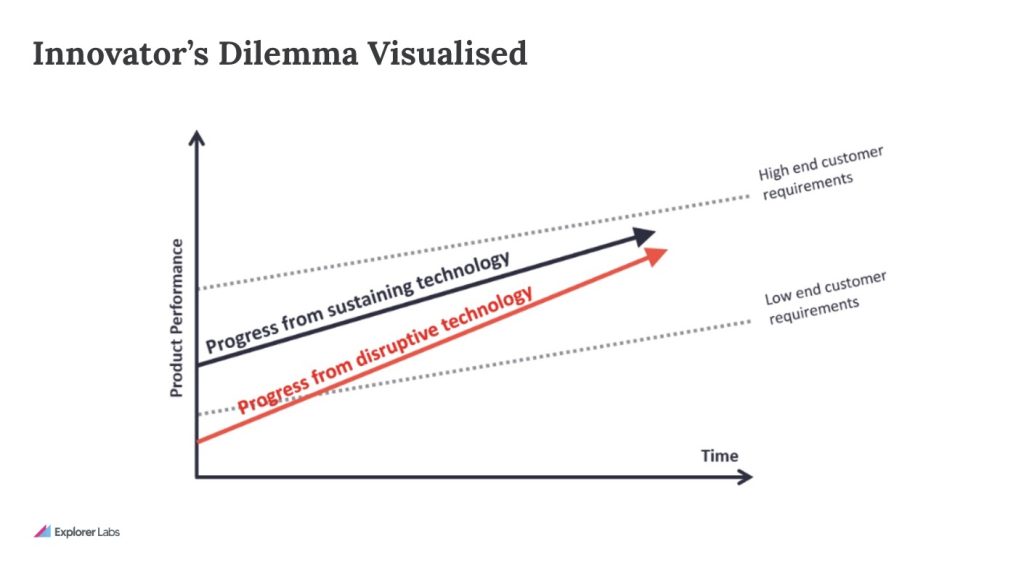
Navigating Clayton Christensen’s classic Innovator’s Dilemma is the ultimate paradox for established B2B and B2C organisations: how do you optimise core operations while simultaneously investing in disruptive futures before the market shifts beneath you? Traditional strategic planning often fails here because it relies on as-is linear forecasting and existing customer needs, leaving innovation teams blind-sided by non-linear market changes.
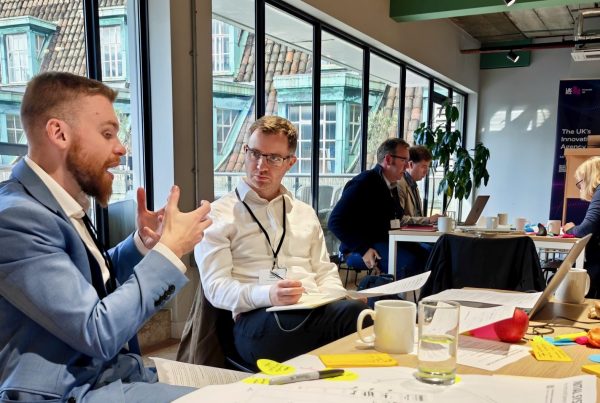
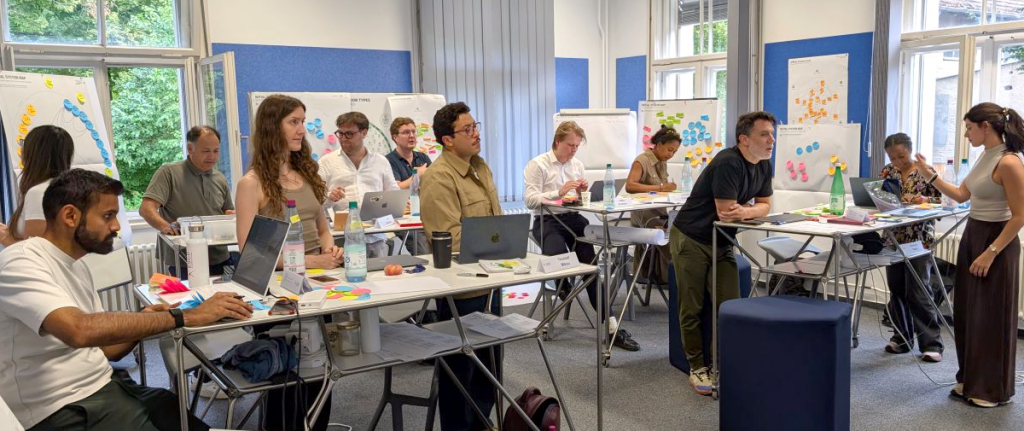
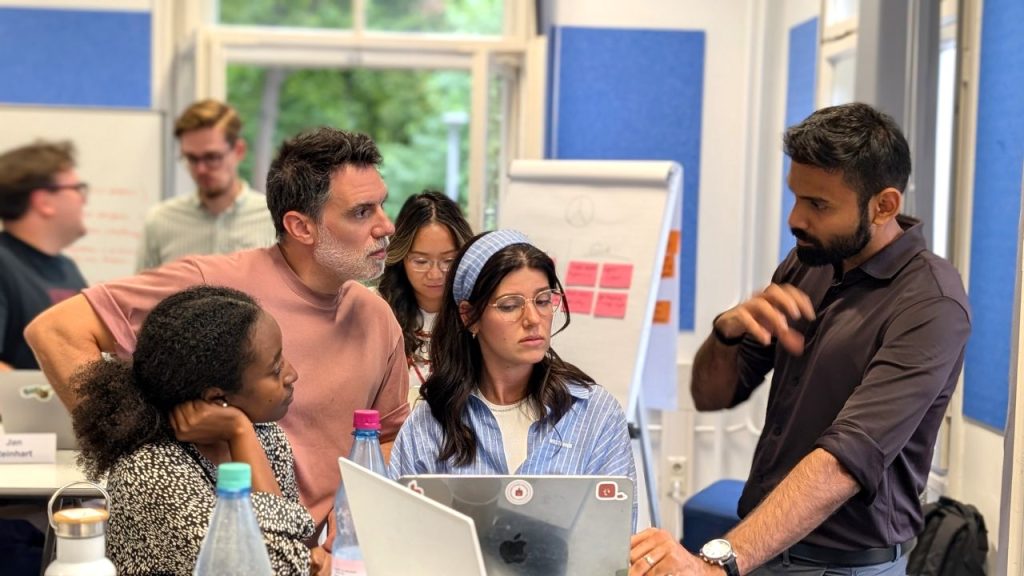
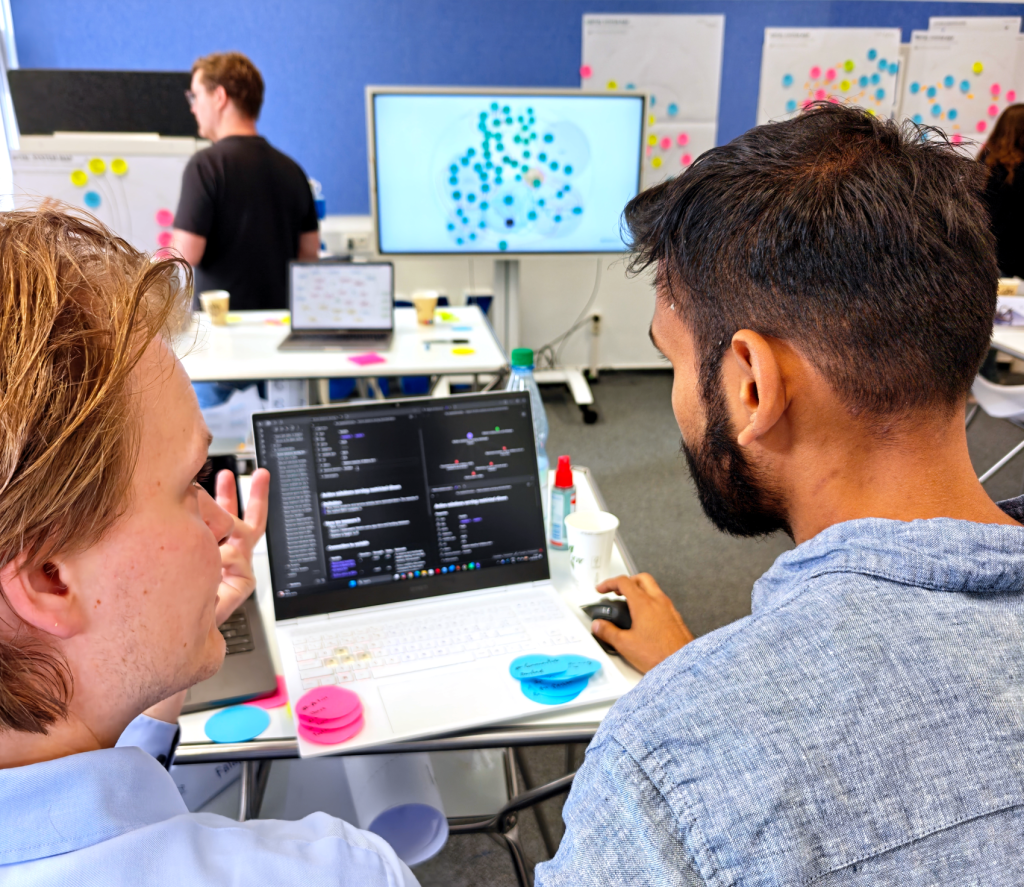
Explorer Labs recently tackled this exact challenge with Executive MBAs at ESCP Berlin on the Executive Master in Digital Innovation and Entrepreneurial Leadership (EMDIEL), deploying a hybrid programme that combined in-person physical tooling with remote Miro collaboration. Designed as a fully documented, repeatable workflow, the initiative equips corporate innovation teams with a systematic toolkit to manage the Innovator’s Dilemma head-on.

Programme Architecture: From Signals to Execution
Structured around a rigorous two-day framework, the programme bridges macro-level horizon scanning with micro-level execution:
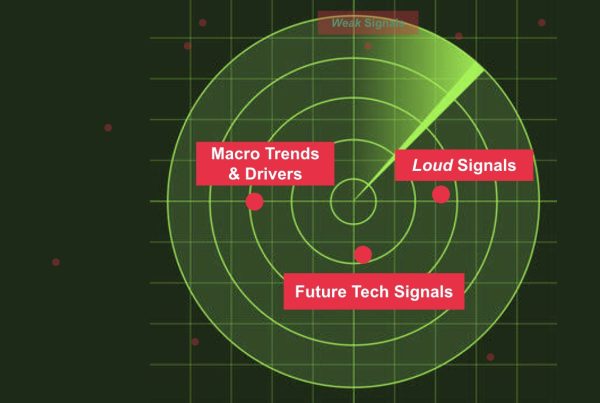
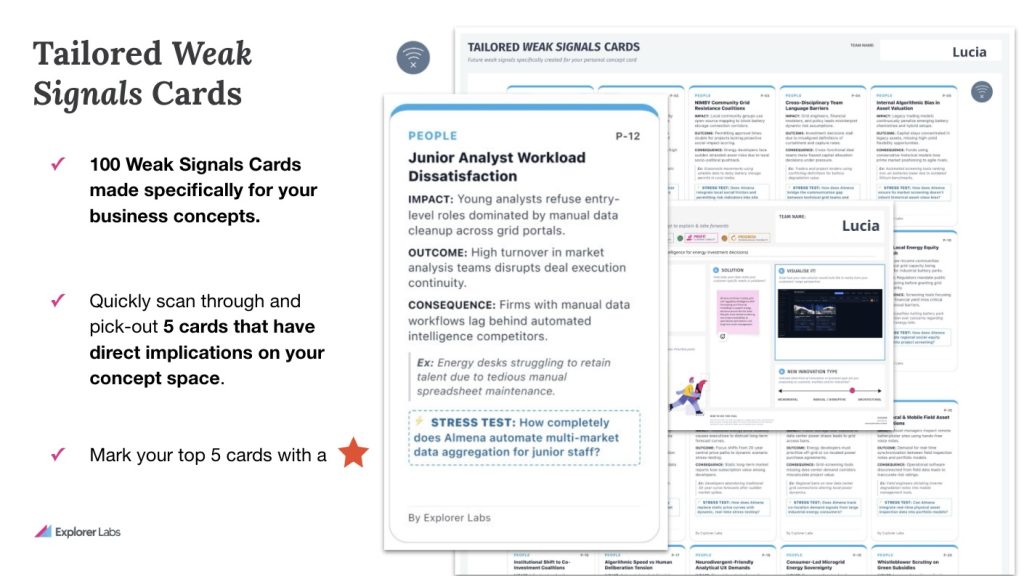
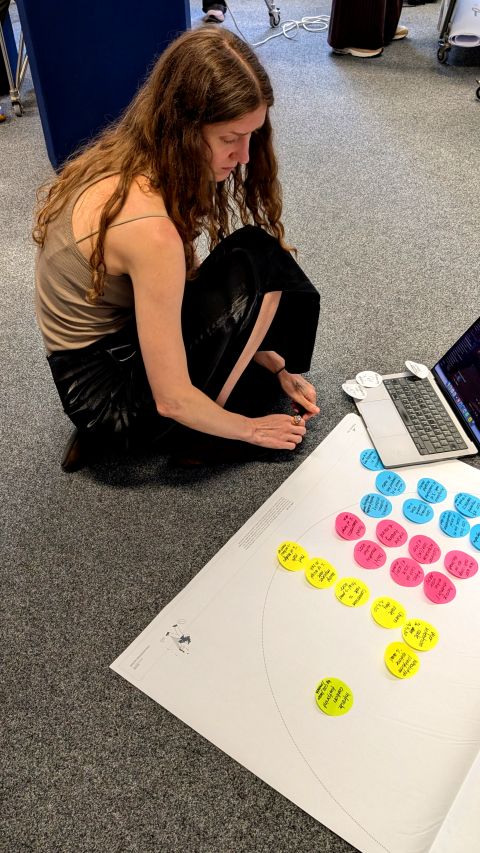
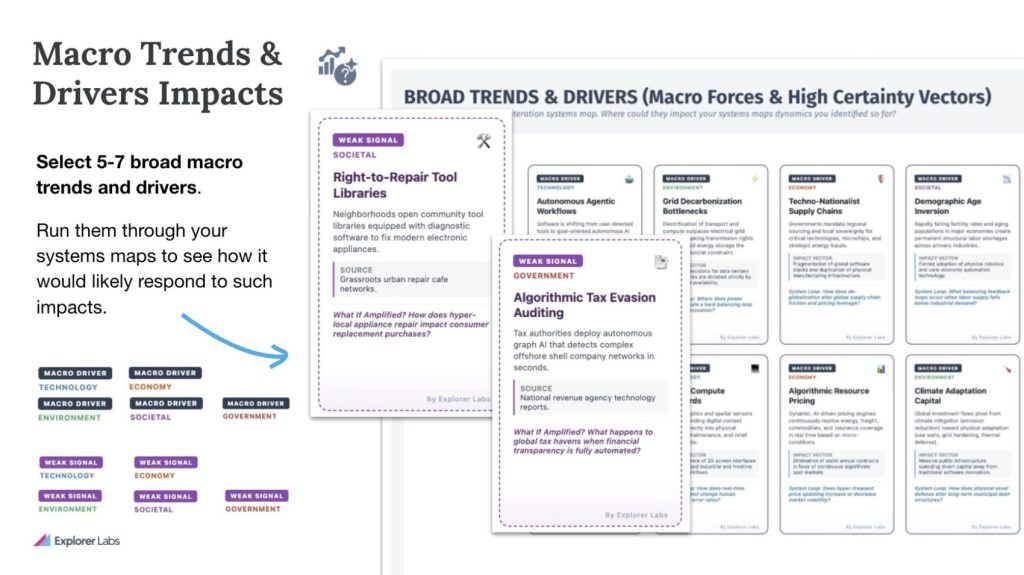
- Day 1: Scoping & Signalling — Teams map wider ecosystems and categorise discoveries from weak, emerging, or strong signals embedded in Technology Trends and Macro Drivers. Crucially, this signals tooling is uniquely tailored to the specific startup business ideas of individual participants, ensuring that theoretical foresight is immediately grounded in real-world commercial concepts.
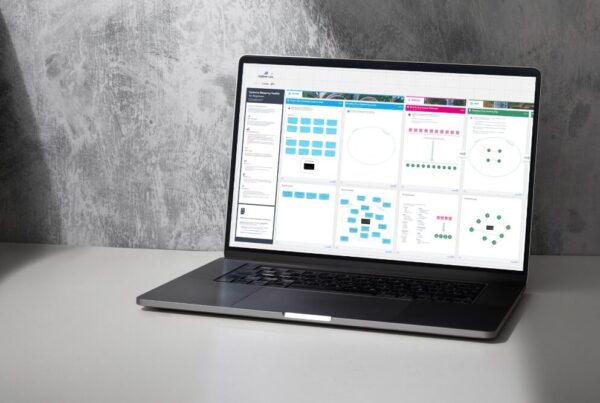
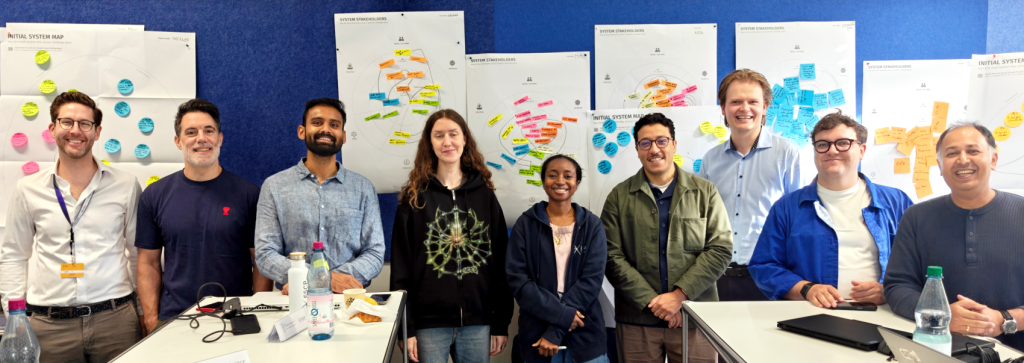
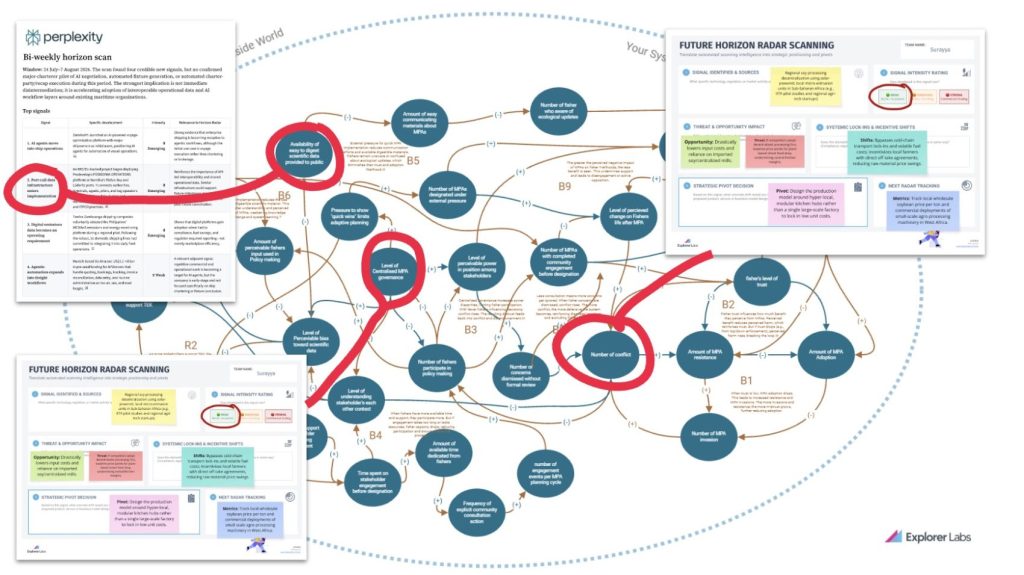
- Day 2: Mapping & Scanning — Participants build detailed Systems Maps with causal loop diagrams in Miro, stress-testing systems against potential future disruptions before designing targeted lean experiments when they emerge.
Tools, Templates and Repeatable Workflows
Every stage of the workflow is fully documented and anchored by custom-designed visual frameworks that corporate teams can reuse across future projects:
- Tailored Future Horizon Radar Scanning Cards: Track automated intelligence mapped directly to specific internal product concepts or venture ideas.
- Systemic Interaction & Stress-Testing Canvases: Analyse how weak signals and global trends challenge or accelerate specific feedback loops on the systems map.
- Systemic Experiment Design Cards: Formulate 2–4 week low-cost MVP pilots and track leading indicators to validate shifting system dynamics.

Trained AI Assistant
To ensure continuous constructive and critical feedback throughout and beyond the programme, we trained an EMDIEL AI Teaching Assistant tailored specifically to their individual business concepts. Accessible via a dedicated workspace, the assistant allows teams to query their systems maps for missing causal variables, audit positive and negative feedback loops, evaluate concepts against weak signals, and model second- and third-order unintended consequences long after the formal programme concludes
Partner with Explorer Labs
Overcoming the Innovator’s Dilemma requires shifting your organisation from reactive firefighting to systemic anticipation. By embedding this standardised, repeatable toolkit directly into your innovation practice, your teams can systematically anticipate disruption and test future scenarios with confidence.
Reach out to Explorer Labs to discuss how we can help develop this mindset, tooling, and approach within your corporate innovation teams.
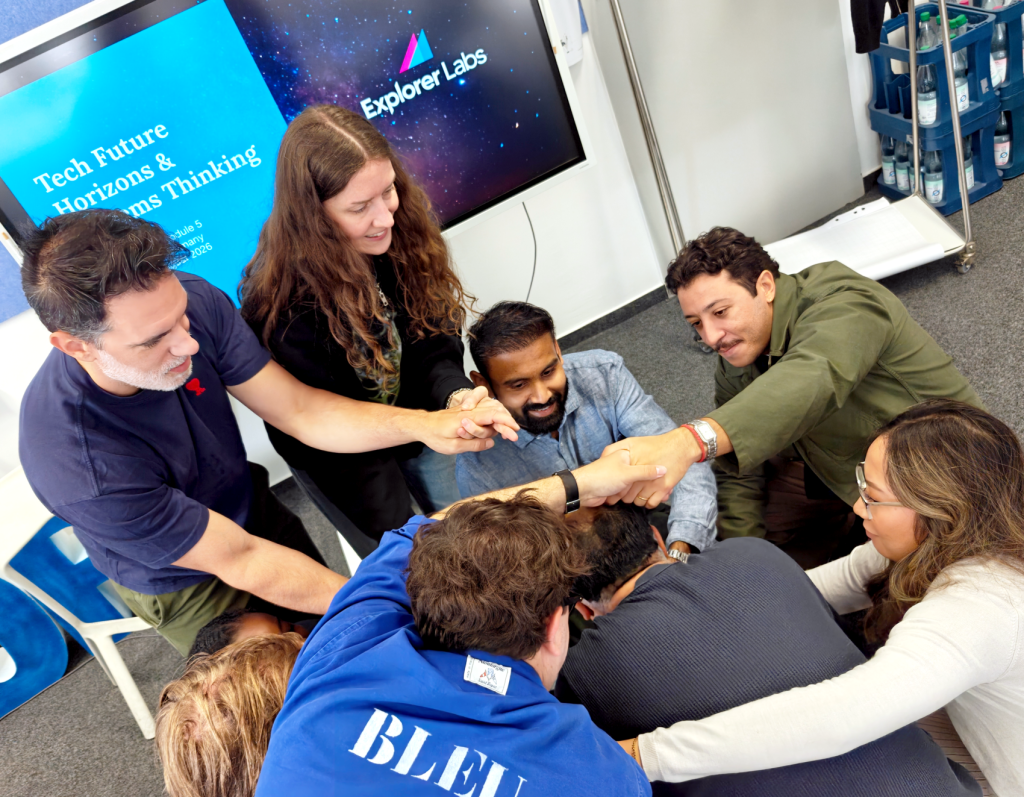
A huge thank you to Christoph Seckler and Alison Masse for inviting Explorer Labs over to run the 2 day programme.
References
Christensen, C.M., 1997. The Innovator’s Dilemma: When New Technologies Cause Great Firms to Fail. Boston: Harvard Business School Press.
Bower, J.L. and Christensen, C.M., 1995. Disruptive technologies: Catching the wave. Harvard Business Review, 73(1), pp.43–53.
Photo: @egorkomarov

Let’s talk!
Reach out below
We’ll discuss your specific sustainable business-innovation challenges and what to do about them

Mike Pinder is a cross-industry business and innovation consultant, thought leader, author, senior trainer, lecturer and international keynote speaker. He’s driven by using innovation to leave the World a better place than we found it. Mike is a co-founder of Wicked Acceleration Labs (an industry-academia research lab aimed at tackling complex Systemic and Wicked Problems), Member of Board of Advisors at Global Innovation Institute (GInI), & Honorary Practice Fellow at Imperial College London Business School.
Mike consults and leads across Innovation Strategy, Systemic Design, Systems Thinking, Design Thinking, Lean Start-up and Entrepreneurship, Business Model Innovation in both B2B and B2C. He guides, trains and facilitates: C-Level Innovation Strategy, AI Enhanced Innovation Process and Methods, Tool Development and Design, Innovation Accelerators, Innovation Capability Training Programs, Academic Research, Executive Education (Exec Ed), University Program Design, Intrapreneurship, Digital Transformation, Design Sprints and more.