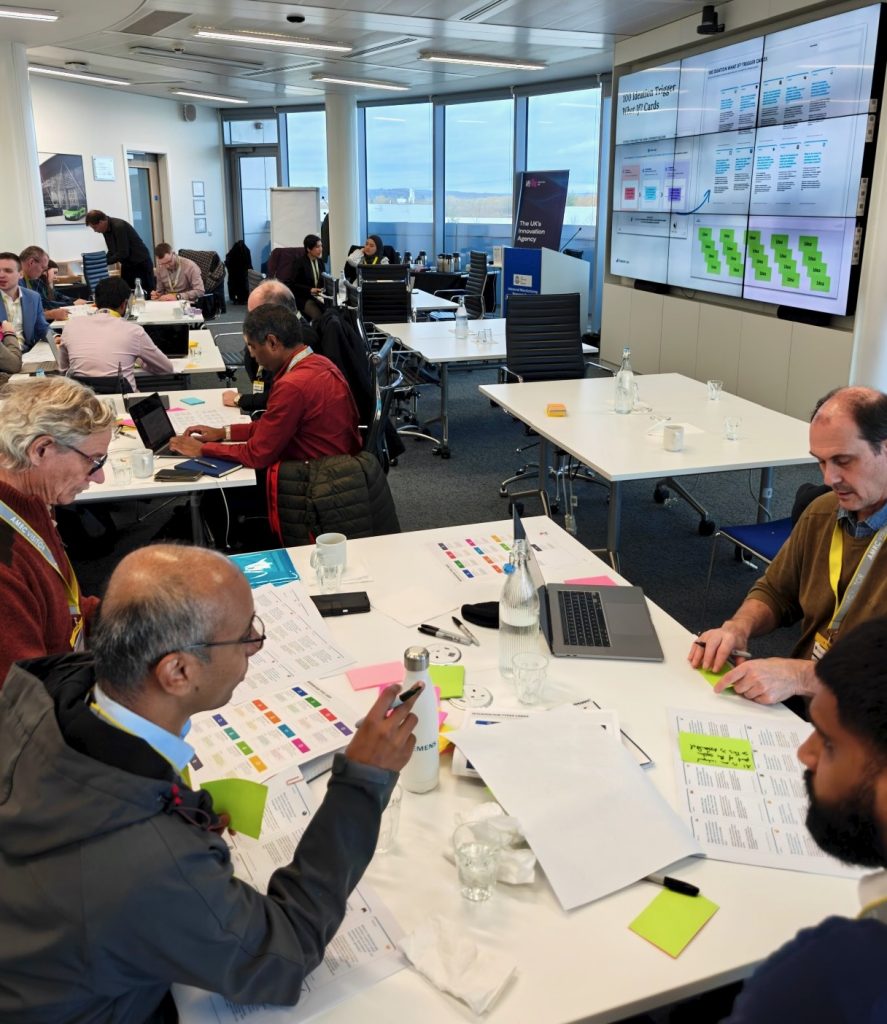
At the end of last year, we had the privilege of designing and facilitating the Innovate UK Ignite Lab on Industrial Decarbonisation.
Over several intense, high-energy weeks, we worked alongside 30 eager teams from across the UK to tackle one of the most pressing “wicked problems” of our time: how to de-fossilise industry through fuel switching and e-fuels.
While the technical challenges of Net Zero are immense, our approach was built on a core belief: technology alone won’t save us. To drive real intervention, we have to look at the complex systems that surround science.

The Goal: De-risking the Path to Net Zero
The Ignite Lab wasn’t just a training program; it was a structured “de-risking” engine. Our goal was to take businesses—many of whom had the technical expertise but lacked a validated business model—and equip them with the tools to identify high-potential, market-ready opportunities. We focused specifically on the complexities of direct electrification and the e-fuel ecosystem.
Designing the Journey: Systems Thinking meets the Double Diamond
We structured the program across four intensive modules, grounded in a Double Diamond approach but heavily infused with Systems Thinking.
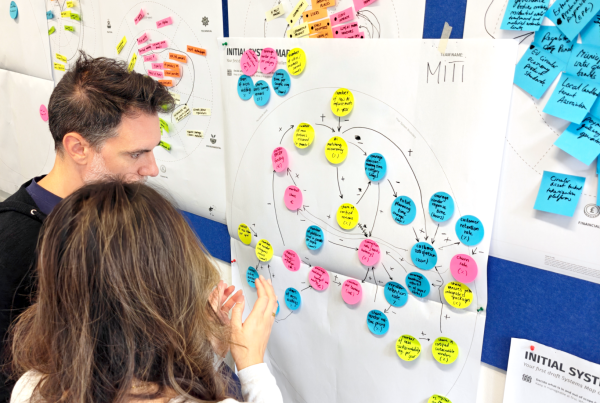
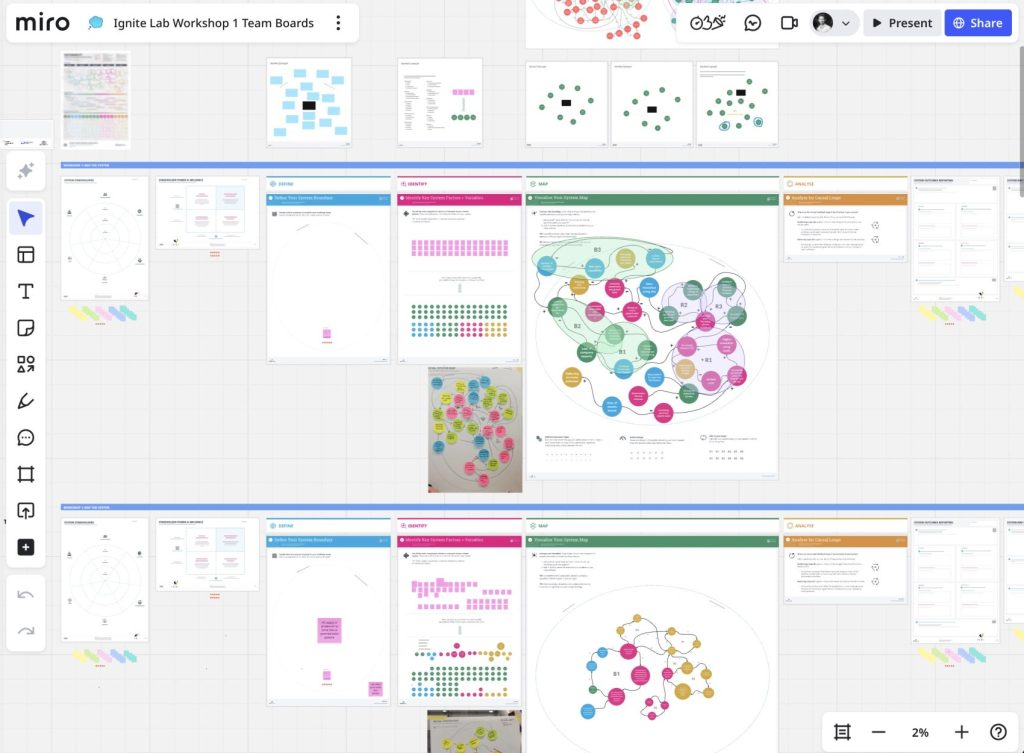
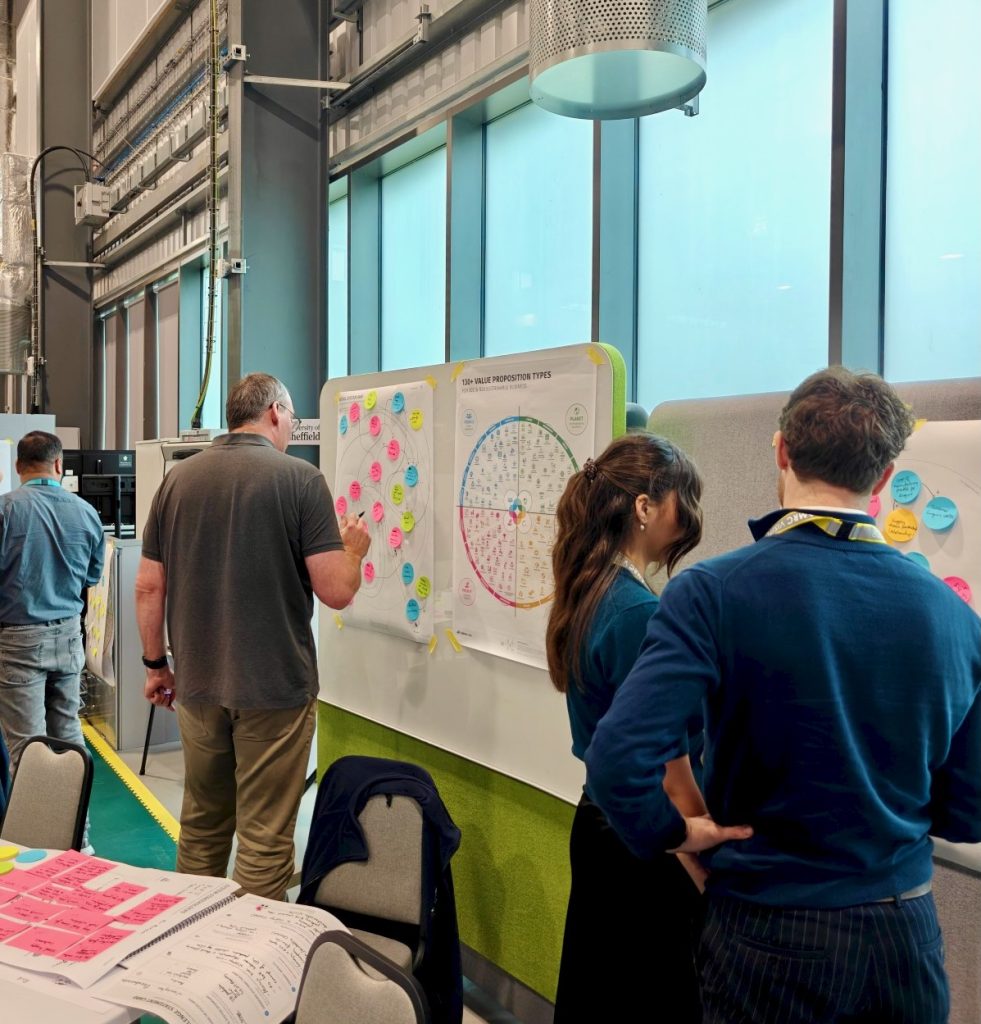
- Zooming Out (Systems Mapping): We started by mapping the underlying dynamics of the business landscape. Before looking at solutions, we asked teams to “listen to the system”—identifying the stakeholders, the value exchanges, and the “system blockers” that prevent change.
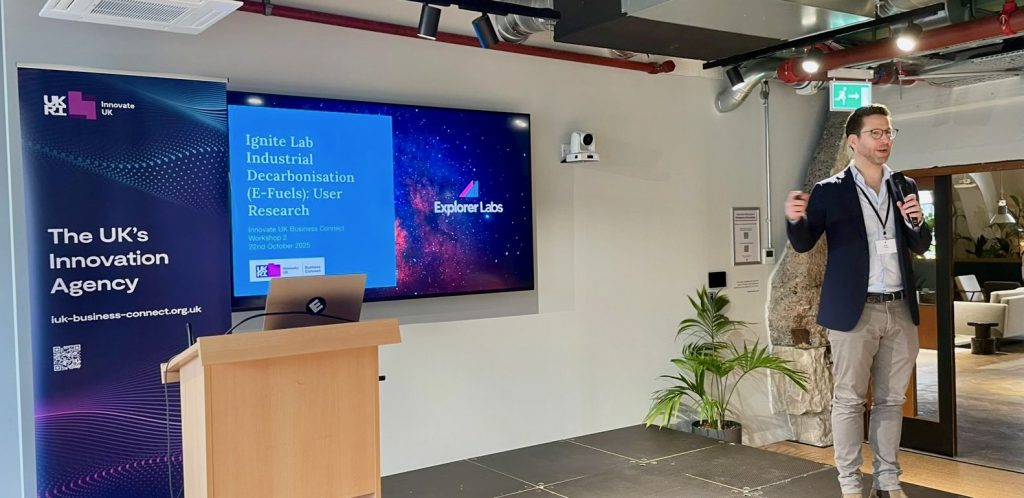
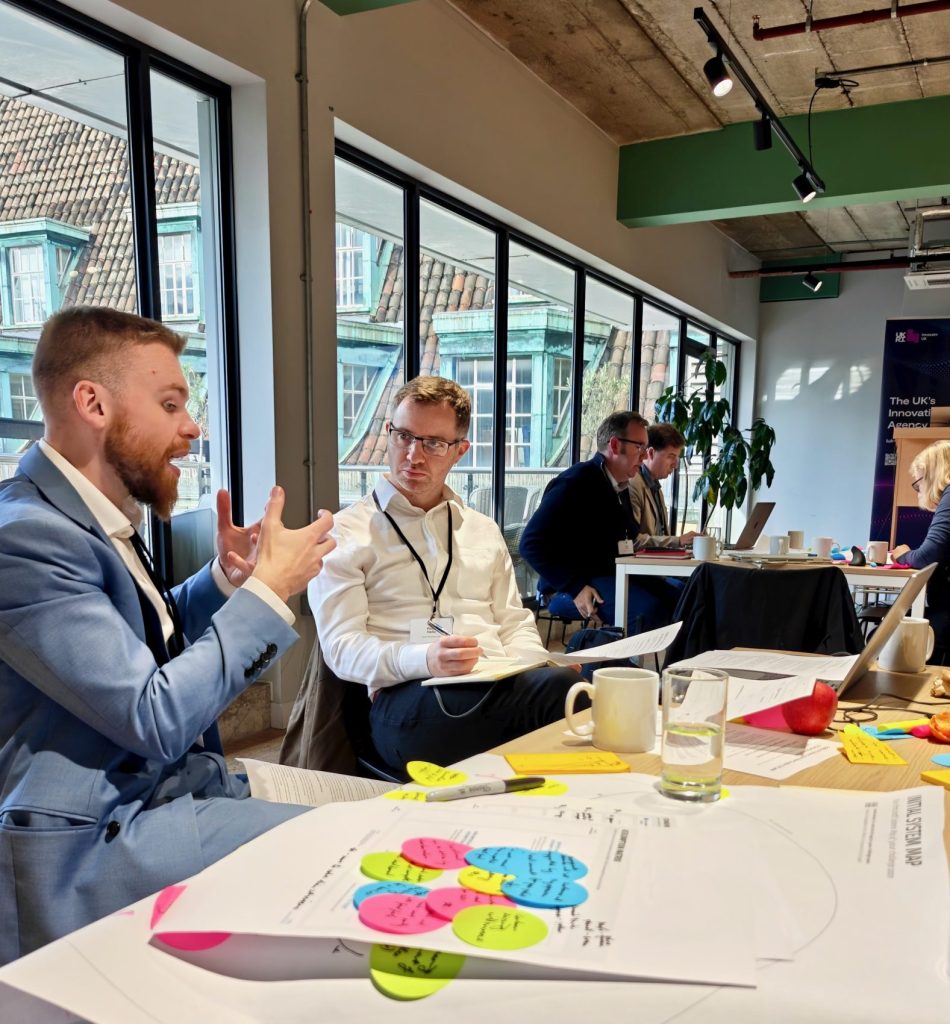
- User Research & Deep Dives: We moved teams from abstract maps to human reality, teaching them to conduct qualitative problem-exploration interviews to uncover the “Jobs to be Done” for B2B and B2C stakeholders.
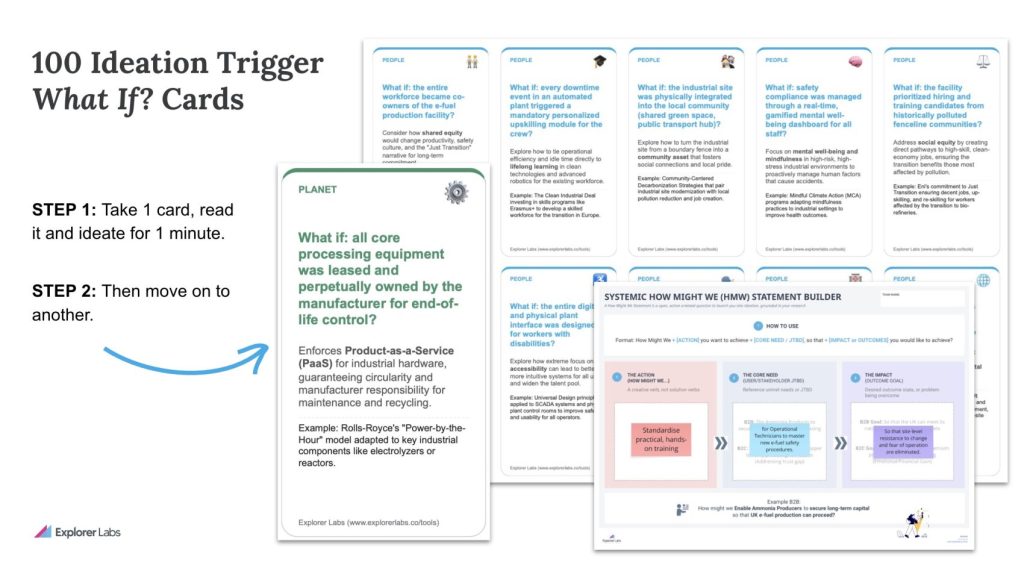
- Problem Framing: Using “Systemic How Might We” (HMW) statements and success criteria scorecards, we helped teams reframe technical hurdles into solvable human and business challenges.
- Creative Ideation & Interventions: Finally, we used “Systemic Intervention Cards” to generate and stress-test ideas that were feasible, desirable, and impactful.
Key Learnings: The Value of the Ecosystem
One of the most profound takeaways for the participants—and for us as facilitators—was the importance of zooming out. It is incredibly easy to get trapped in the “specific technology challenge.” However, the real issues—the ones that stop a transition in its tracks—are usually located in the wider ecosystem.
By mapping the system, teams identified that the “blocker” wasn’t always the energy density of a fuel; it was often the lack of long-term off-take contracts, supply chain traceability, or the “green premium” trust gap. We believe this is where the true value of the program lies: addressing these issues one by one to make the transition possible.

Innovation as a Critical Perspective
We pushed the teams to take a hard, critical look at their own “bandwagons.” In innovation, the goal isn’t just to prove you are right; it’s to systematically test assumptions and try to prove yourself wrong as quickly and cheaply as possible. This mindset is key to mitigating risk in systemic change situations.
Collaboration Across the UK
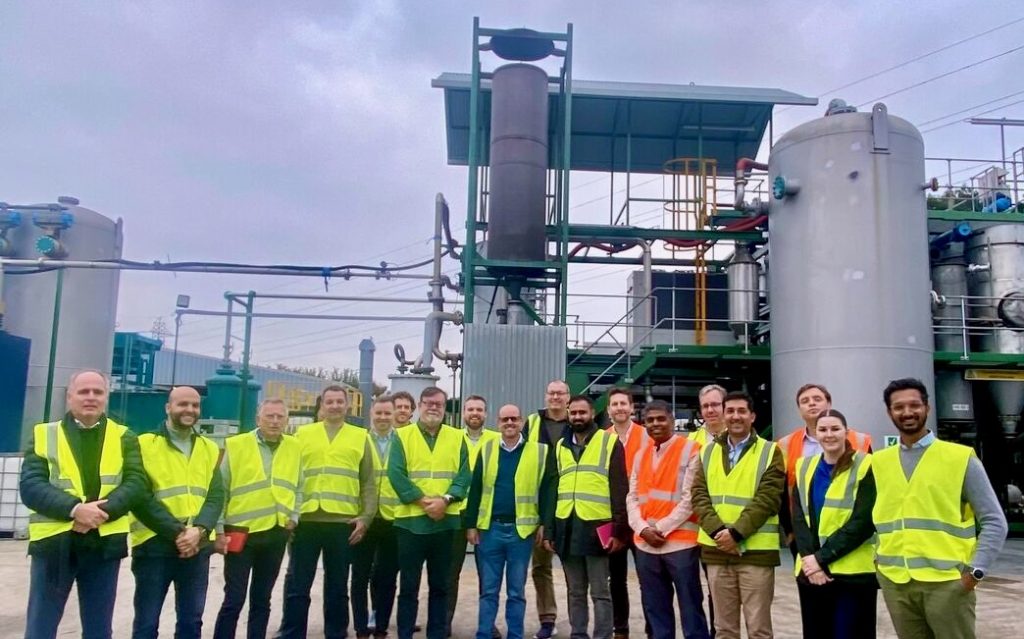
The program was located all over the UK at leading technology development centers (AMRC Factory 2050 and AMRC Cymru), to inspire teams to seek out funding and make an impact. This provided a vital space for teams from cross-sector perspectives to meet, share ideas, and find collaboration opportunities that accelerate the transition.
A Big Thank You
An ambitious program like this requires a team. We would like to extend our sincere thanks to Harry Kerr, Florian Straumann, Laine Neucom, Avijita Kharel, Anita Onwuegbuzie, and Cristobal Garcia-Herrea for their incredible collaboration and support during the Ignite Lab Programme.
Photo: @richard_he

Mike Pinder is a cross-industry business and innovation consultant, thought leader, author, senior trainer, lecturer and international keynote speaker. He’s driven by using innovation to leave the World a better place than we found it. Mike is a co-founder of Wicked Acceleration Labs (an industry-academia research lab aimed at tackling complex Systemic and Wicked Problems), Member of Board of Advisors at Global Innovation Institute (GInI), & Honorary Practice Fellow at Imperial College London Business School.
Mike consults and leads across Innovation Strategy, Systemic Design, Systems Thinking, Design Thinking, Lean Start-up and Entrepreneurship, Business Model Innovation in both B2B and B2C. He guides, trains and facilitates: C-Level Innovation Strategy, AI Enhanced Innovation Process and Methods, Tool Development and Design, Innovation Accelerators, Innovation Capability Training Programs, Academic Research, Executive Education (Exec Ed), University Program Design, Intrapreneurship, Digital Transformation, Design Sprints and more.

Let’s talk!
Reach out below
We’ll discuss your specific sustainable business-innovation challenges and what to do about them