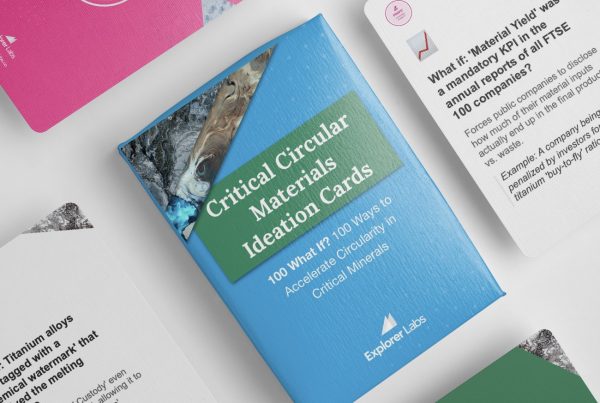
IIn the race to reach net-zero, many teams rush toward a technical solution—a better recycling chemical, a stronger bio-composite, or a more efficient sensor..
But even the most brilliant technology can fail if it’s dropped into a broken, friction-filled system. To drive true systemic change, we must move from solving isolated technical problems to diagnosing the entire value chain.
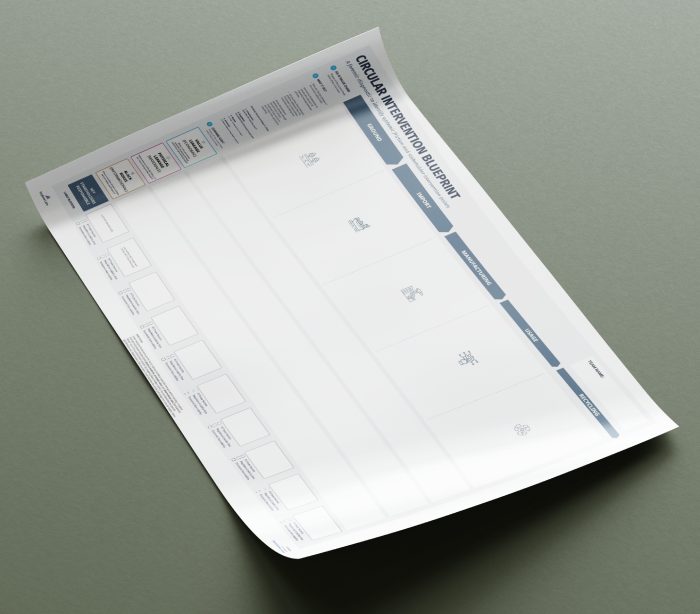
Our Circular Intervention Blueprint Canvas is a forensic diagnostic designed specifically to identify the systemic friction and stakeholder intervention points that technical specs often miss.
A National Mandate: The UK Industrial Strategy
The landscape for resource efficiency has shifted. Critical Circular Materials are now a core pillar of the UK Government’s new Industrial Strategy, designated as a high-priority area for innovation and large-scale business transformation. This strategic alignment underscores that circularity is no longer just a sustainability goal, but a fundamental requirement for industrial resilience and economic growth.
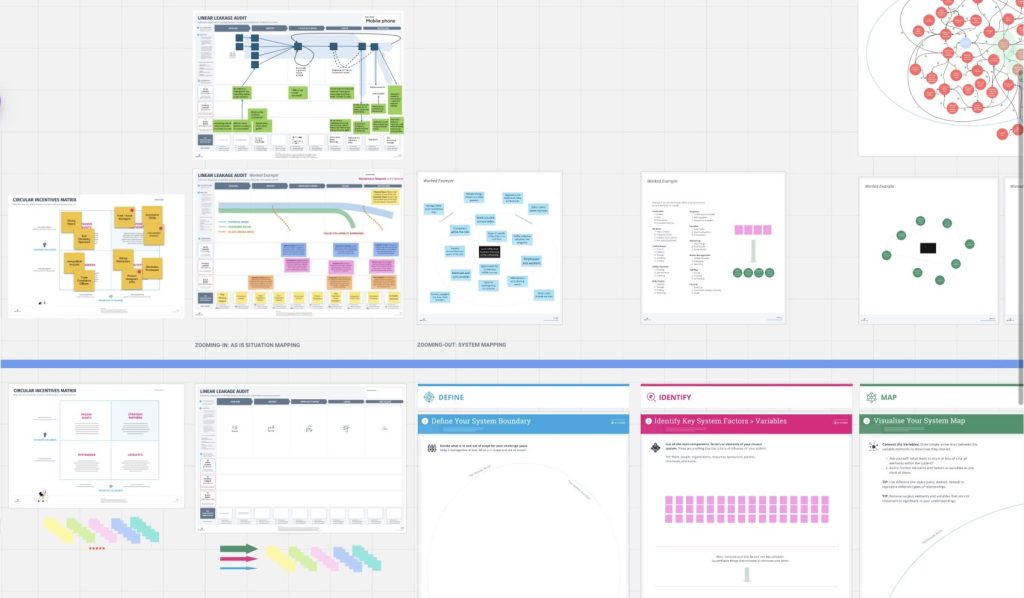
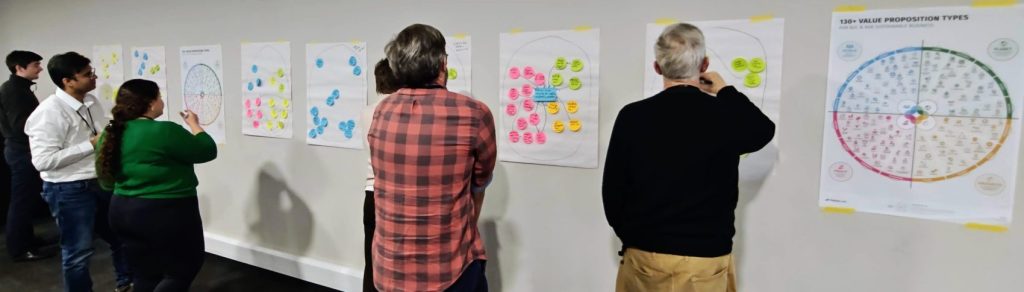
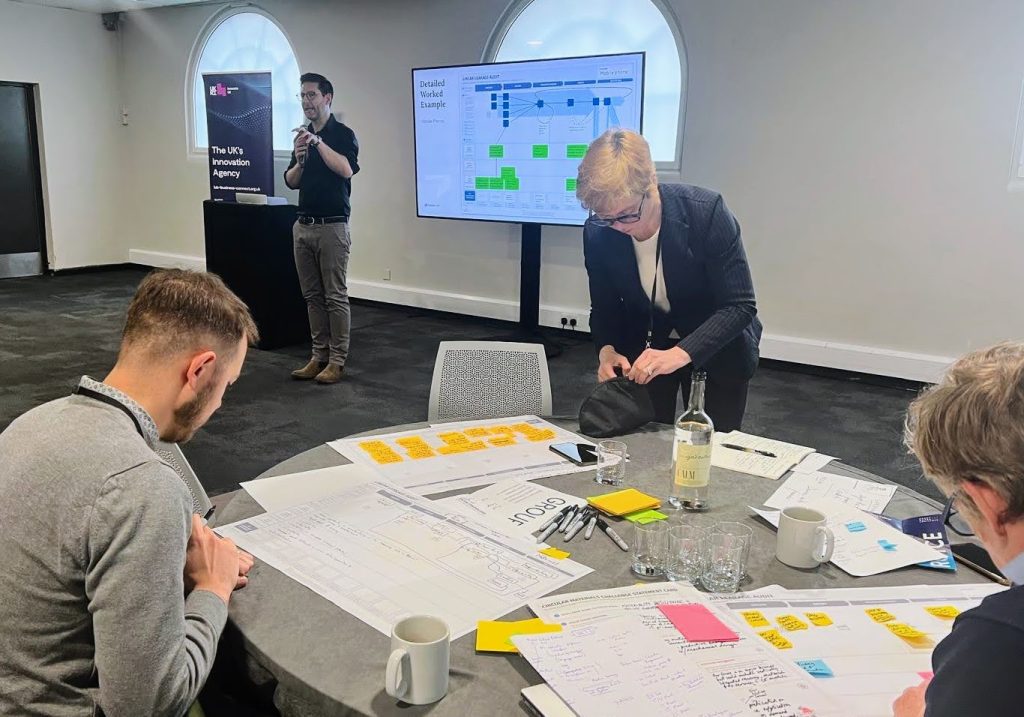
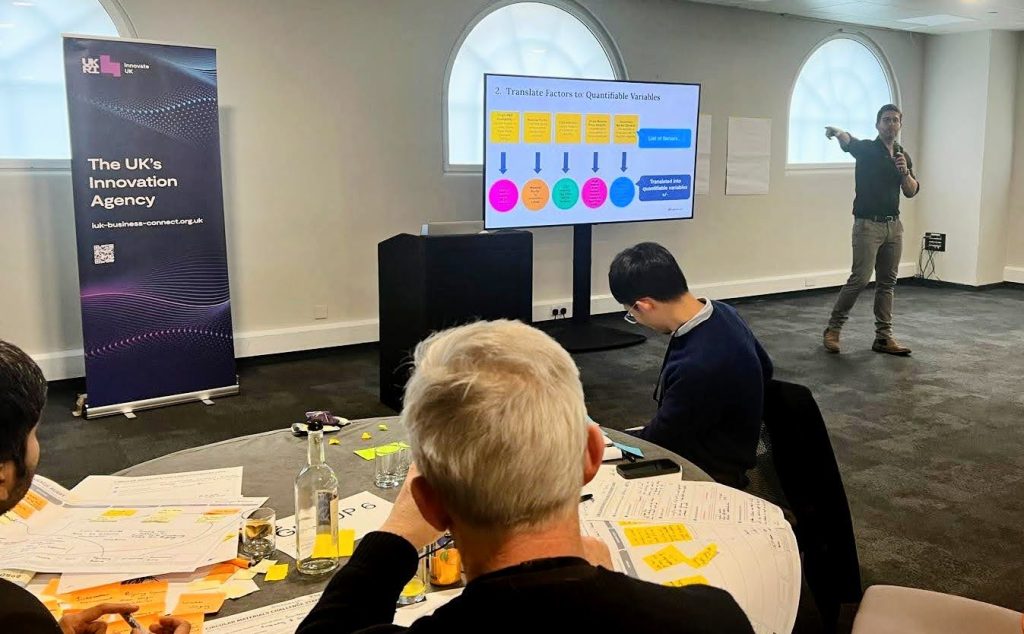

Lessons from Innovate UK Business Connect Ignite Lab on Critical Circular Materials
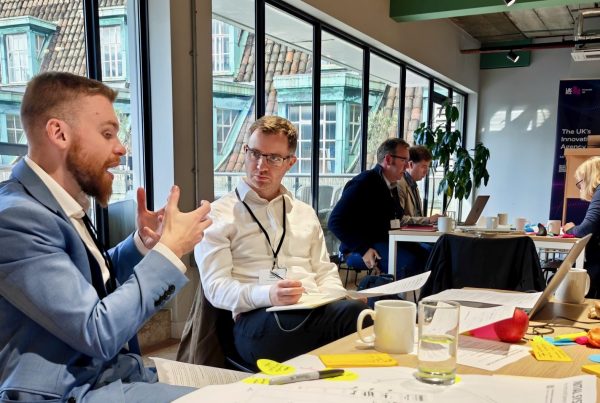
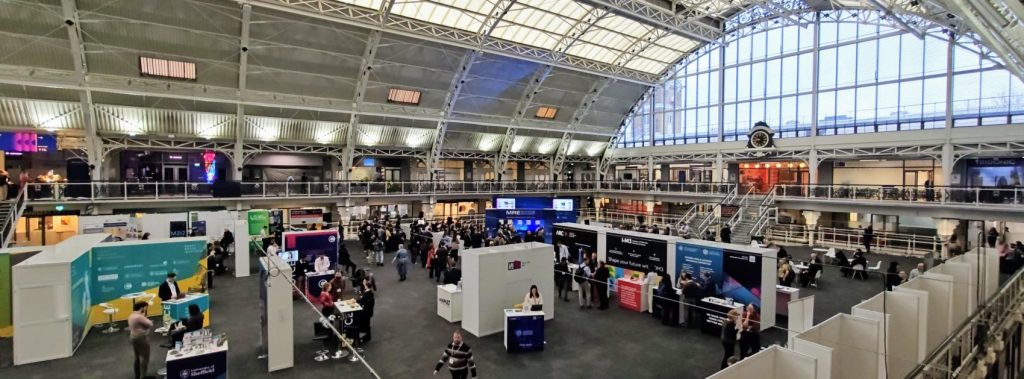
During the Innovate UK Business Connect Ignite Lab on Critical Circular Materials, this canvas was deployed to help 28 teams navigate the complex journey of critical minerals and materials from extraction to end-of-life. In high-stakes innovation environments like these—where government strategy meets industrial execution—the tool serves as a vital reality check.
It forces teams to look beyond their specific “solution” and map the As-Is Value Chain—the messy, linear reality of how materials currently move from the Ground and Import through Manufacturing, Usage, and eventually Recycling.
Beyond the Technical: Auditing Triple Leakage
We pushed the teams to take a hard, critical look at their own “bandwagons.” In innovation, the goal isn’t just to prove you are right; it’s to systematically test assumptions and try to prove yourself wrong as quickly and cheaply as possible. This mindset is key to mitigating risk in systemic change situations.
If you already have a technical solution in mind, this canvas is actually more important for you. It prevents “solution bias” by reframing your thinking around three critical dimensions of leakage:
- Value Leakage (Economic): Pinpointing where the economic value of a product or service is interrupted by high collection or processing costs.
- Physical Leakage (Materials): Identifying exactly where assets are physically falling off the map or being contaminated.
- Black Boxes (Informational): Surfacing where the “data” is missing or hidden behind Intellectual Property and trade secrets.
By quantifying these leakages visually—using arrow thickness to represent the amount of material moving between phases—teams can see exactly where their technical solution fits into the bigger picture.
Identifying the Right Stakeholders for Deep-Dive Interviews
One of the hardest parts of business design is knowing who to talk to. The Circular Intervention Blueprint Canvas includes a dedicated section for Key Stakeholders Responsible and identifies Likely Blockers such as Trade Secrets, Regulatory/Liability Risk, or Economic Non-viability.
This allows teams to:
- Identify exactly who owns the “friction” at a specific stage.
- Prepare for problem exploration interviews with a clear understanding of that stakeholder’s specific constraints.
- Ask targeted questions that move the needle from “we have a cool tech” to “we can solve your specific systemic bottleneck”.
The Power of Visual System Mapping
Complexity is the enemy of buy-in. When you make a map visual and quantifiable, you transform an abstract conversation into a forensic diagnostic. Seeing a “Black Box” or a massive “Physical Leakage” on a canvas visually engages stakeholders; it makes the inefficiencies undeniable.
This visual clarity helps you develop more robust system maps that don’t just track materials, but track the friction preventing those materials from staying in the loop. By identifying these intervention points early, you can design business outcomes that unlock systemic change and deliver measurable impact.
A Huge Thanks
An ambitious program like this requires a team. We would like to extend our sincere thanks to Harry Kerr, Agostina Argiro Fuertes, Florian Straumann, Anita Onwuegbuzie and Dr Vicky Lofthouse for their incredible collaboration and support during the Ignite Lab Programme.
Ready to Map Your Systemic Friction?
Don’t let hidden leakages stall your transition to a circular model. Whether you are navigating complex material flows or trying to unblock a “black box” in your value chain, the Circular Intervention Blueprint Canvas provides the forensic clarity needed to drive real business design outcomes.
Download the Circularity Intervention Blueprint CanvasLet’s Tackle Your Circular Challenge Together
Are you facing a complex value chain challenge that requires more than just a technical fix? If you are looking to identify intervention points, navigate regulatory blockers, or reframe your system for maximum resource retention, we can help.
Let’s discuss how we can apply this diagnostic to your specific industry and unlock systemic change.
Get in TouchPhoto: @miningwatch_portugal

Mike Pinder is a cross-industry business and innovation consultant, thought leader, author, senior trainer, lecturer and international keynote speaker. He’s driven by using innovation to leave the World a better place than we found it. Mike is a co-founder of Wicked Acceleration Labs (an industry-academia research lab aimed at tackling complex Systemic and Wicked Problems), Member of Board of Advisors at Global Innovation Institute (GInI), & Honorary Practice Fellow at Imperial College London Business School.
Mike consults and leads across Innovation Strategy, Systemic Design, Systems Thinking, Design Thinking, Lean Start-up and Entrepreneurship, Business Model Innovation in both B2B and B2C. He guides, trains and facilitates: C-Level Innovation Strategy, AI Enhanced Innovation Process and Methods, Tool Development and Design, Innovation Accelerators, Innovation Capability Training Programs, Academic Research, Executive Education (Exec Ed), University Program Design, Intrapreneurship, Digital Transformation, Design Sprints and more.

Let’s talk!
Reach out below
We’ll discuss your specific sustainable business-innovation challenges and what to do about them