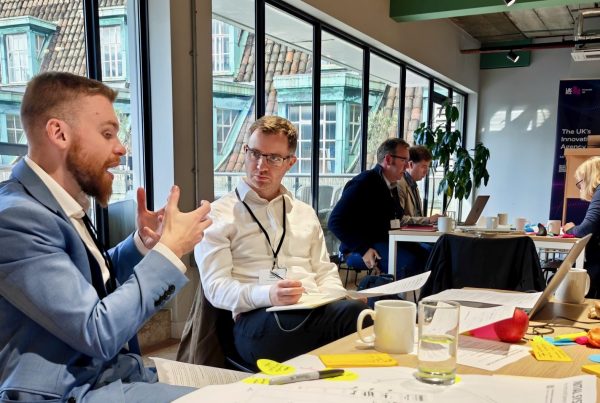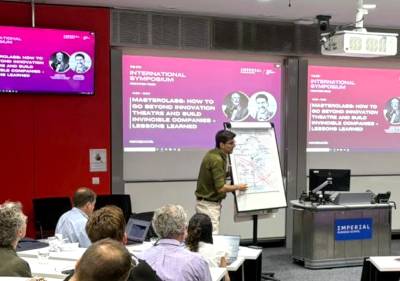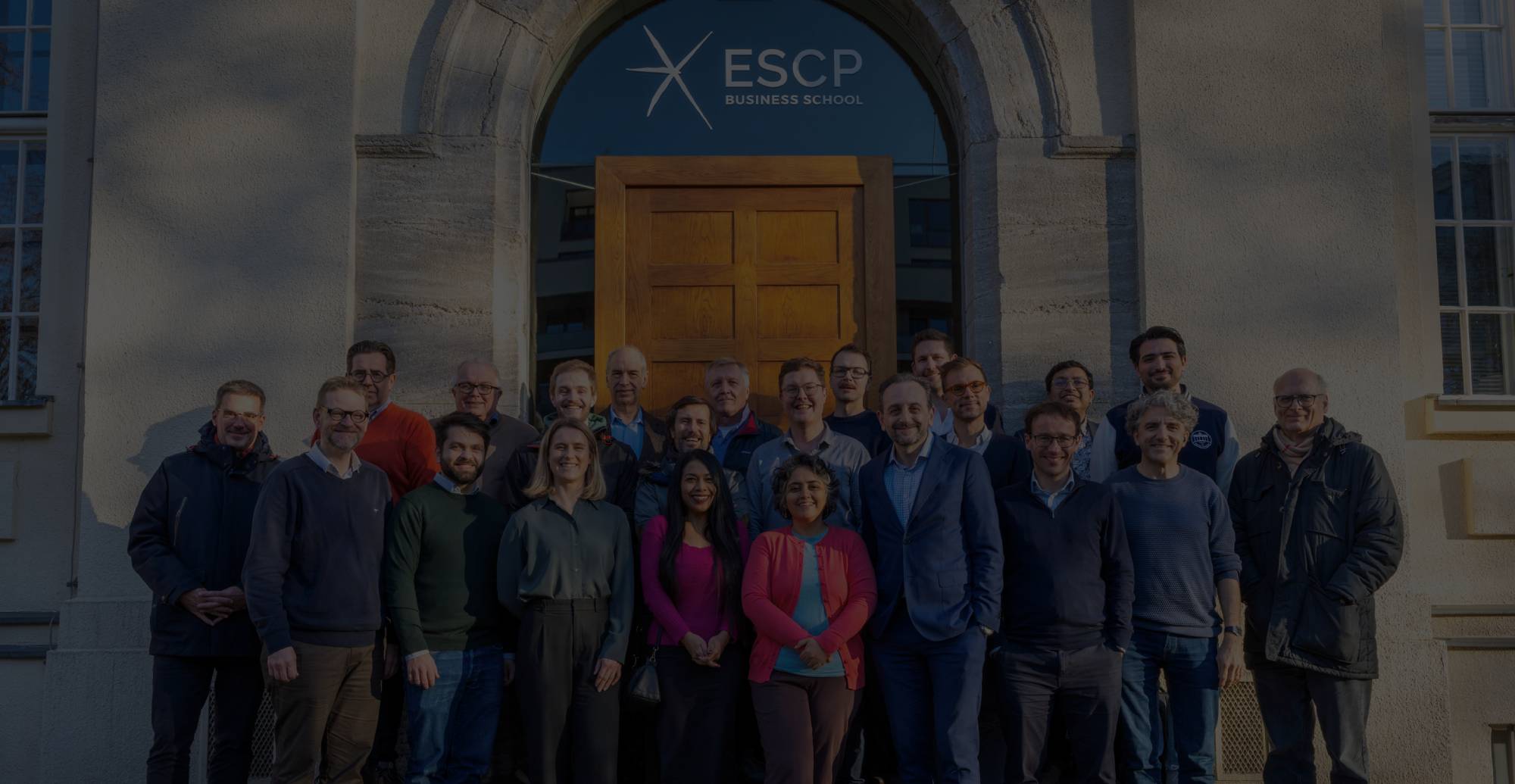
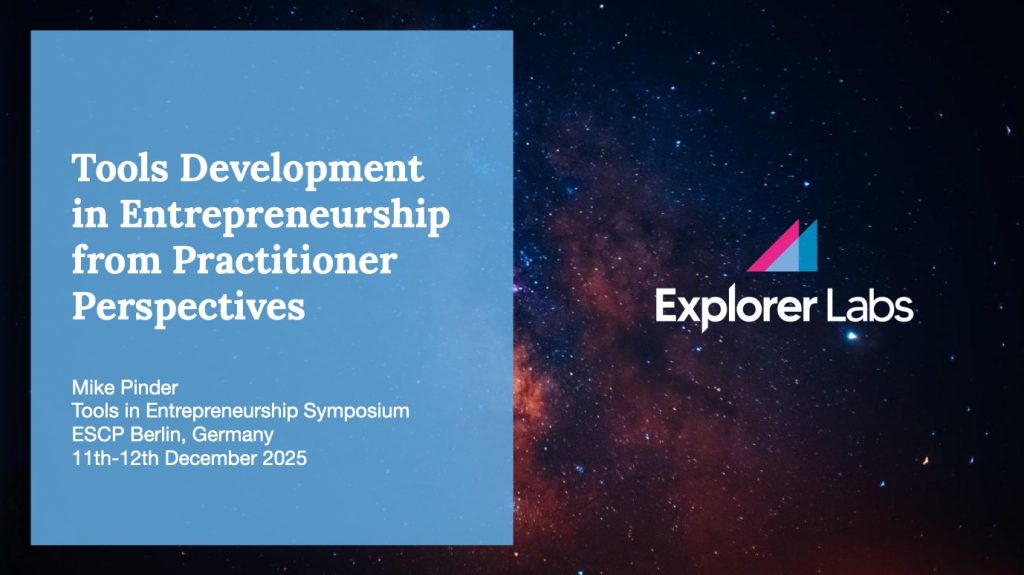
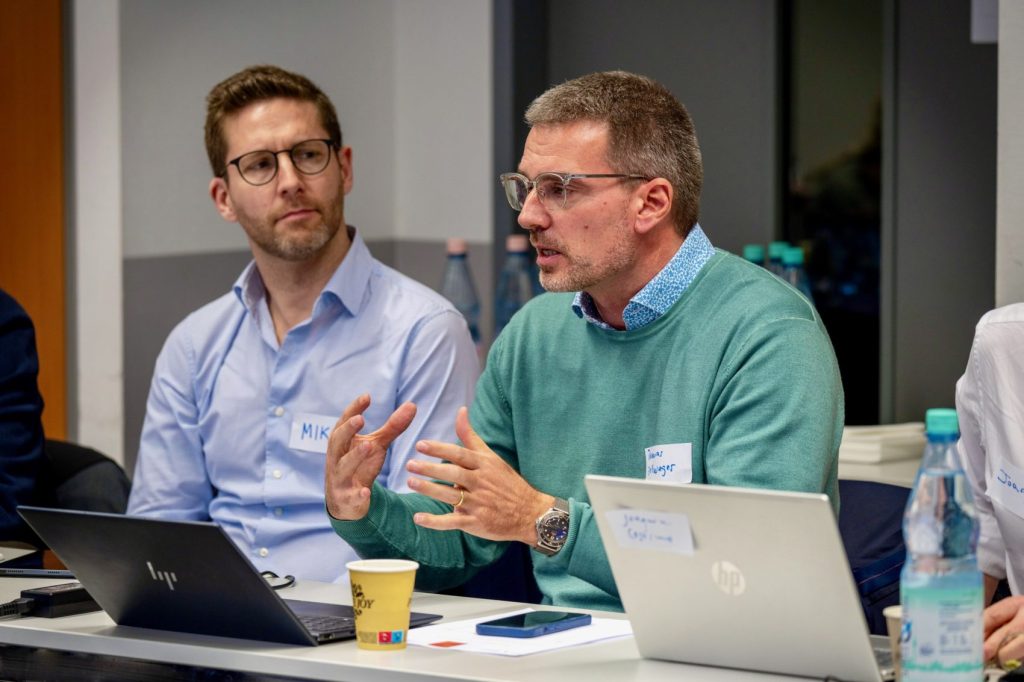
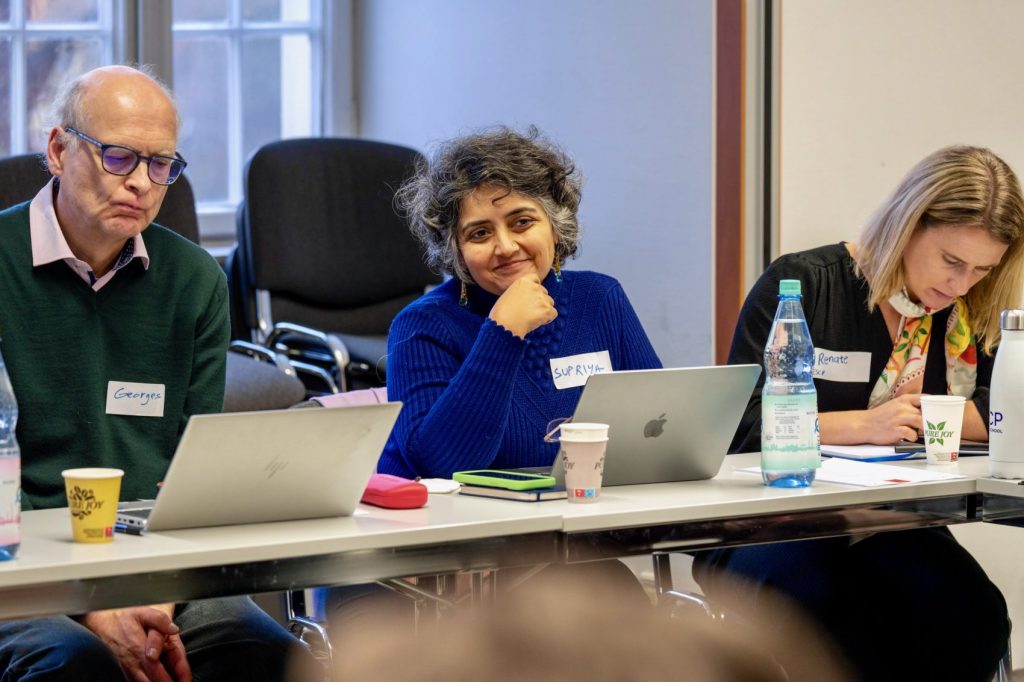
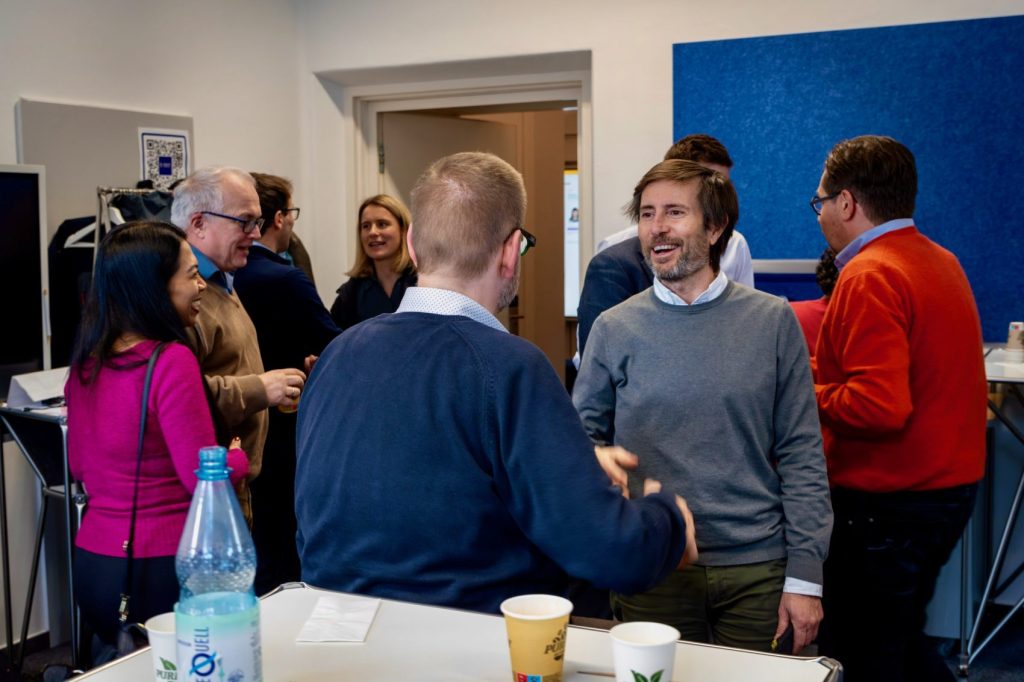
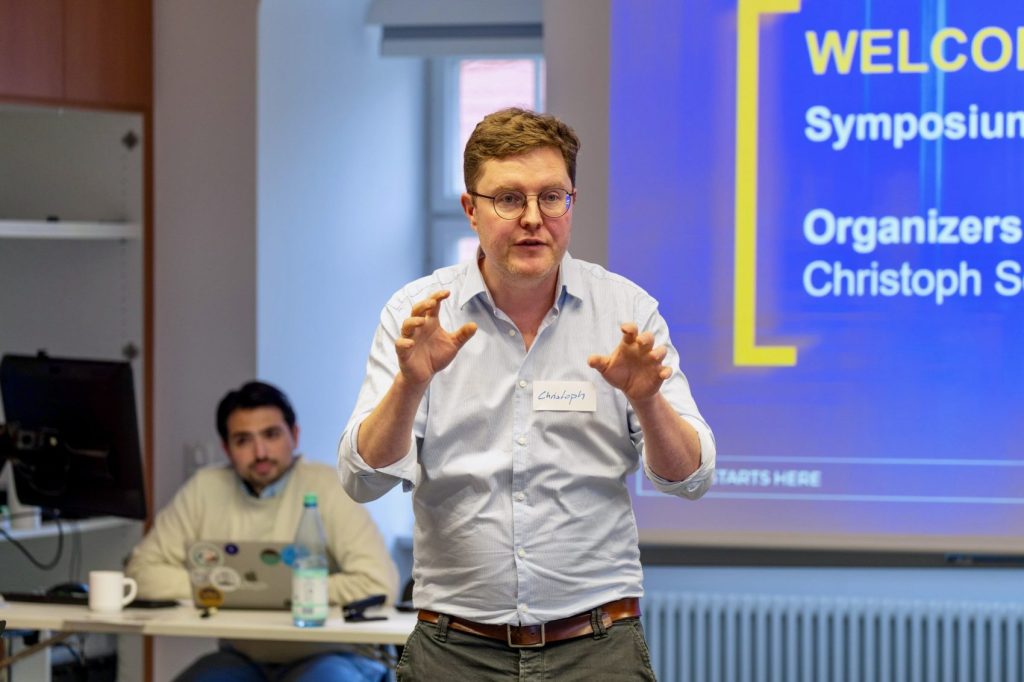
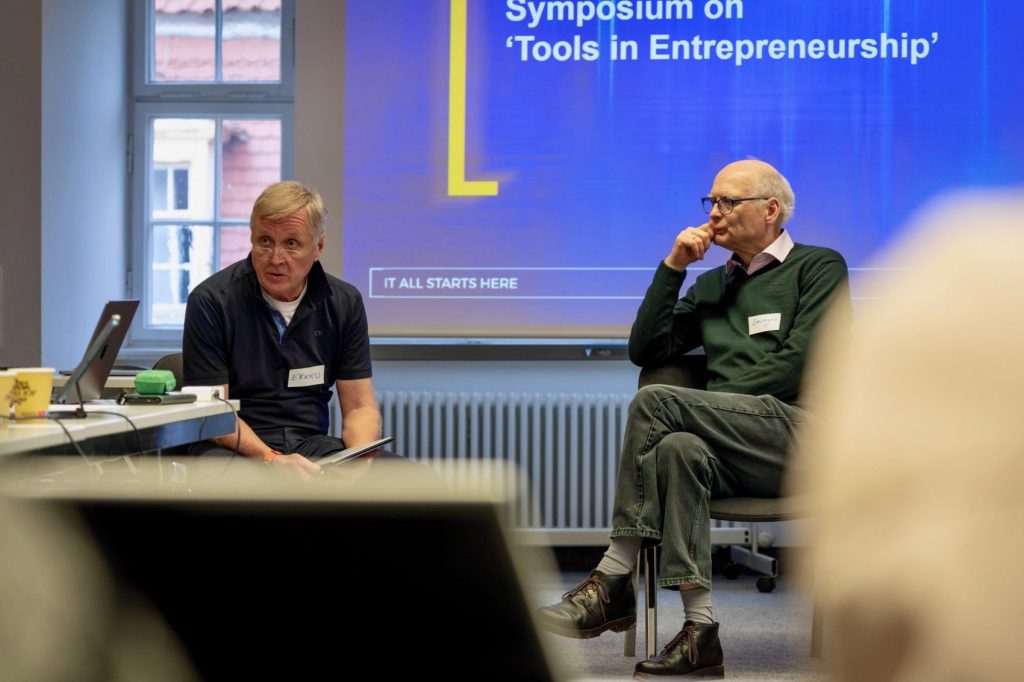
We recently returned from Berlin, where we had the privilege of delivering a keynote at the ESCP Symposium on Tools in Entrepreneurship 2025. The event, hosted at the Center for Design Science in Entrepreneurship, focused on a critical shift in the industry: moving away from descriptive research and toward tools that actually drive intervention and change.
For Explorer Labs, this was an opportunity to share our “Practitioner Perspective” on a fundamental truth: developing custom tools for entrepreneurship is no longer a peripheral activity—it is a strategic dynamic capability. To navigate complex systems, firms must move beyond generic canvases and design their own internal “innovation architecture.”
Here are five key architectural insights from our keynote:


- Explicating the Practice Gap: Innovation architecture begins by identifying where current workflows fail. We shared how we use rigorous “Problem Explication” to find the friction points in a firm’s current methodology before a single tool is ever designed.
- The Workflow is the Artefact: A tool is rarely effective in isolation. True value is found in the workflow—the sequence of knowledge inputs and outputs that guide a team through a complex system. We view the entire process as the design artifact, not just the individual canvas.
- Reducing Cognitive Friction (The ‘First-Time Penalty’): In our research, we’ve found that teams often spend 50% of their energy just trying to understand a new tool. Effective architecture minimises this “First-Time Penalty” through intuitive design, allowing the team to focus 100% of their effort on generating strategic insights.
- Tools as Critical Mirrors: Strategic tools should democratise critique. By building “mirrors” into the process, we enable teams to surface and challenge their own assumptions across the 4P’s (People, Planet, Profit, and Progress), moving decision-making from subjective hierarchy to evidence-based design.
- Systems Thinking as a Lever for Change: Modern innovation requires more than just “problem-solution fit.” We discussed how we architect tools that map underlying system dynamics, helping firms identify the highest-leverage points for intervention and long-term business design outcomes.
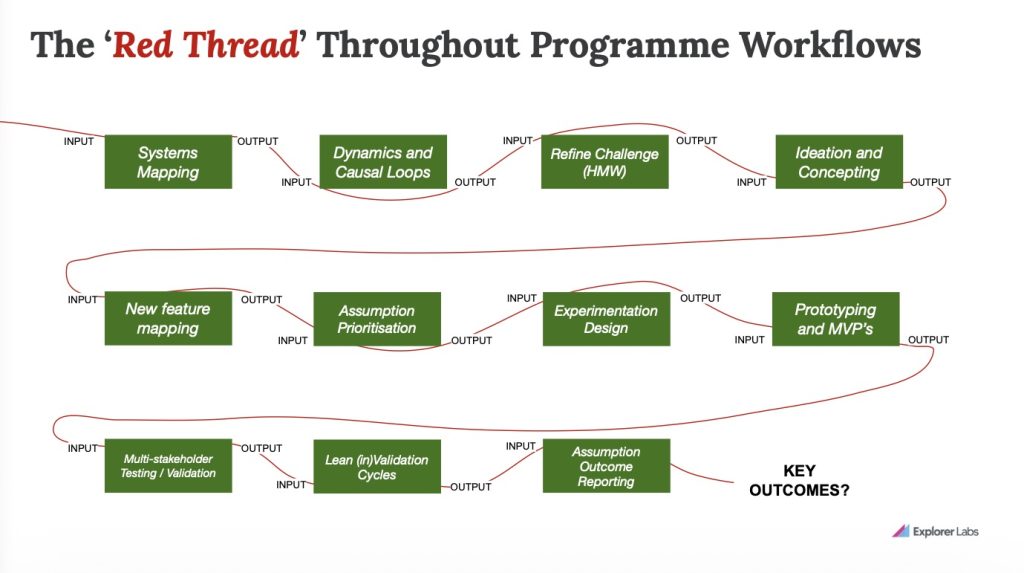
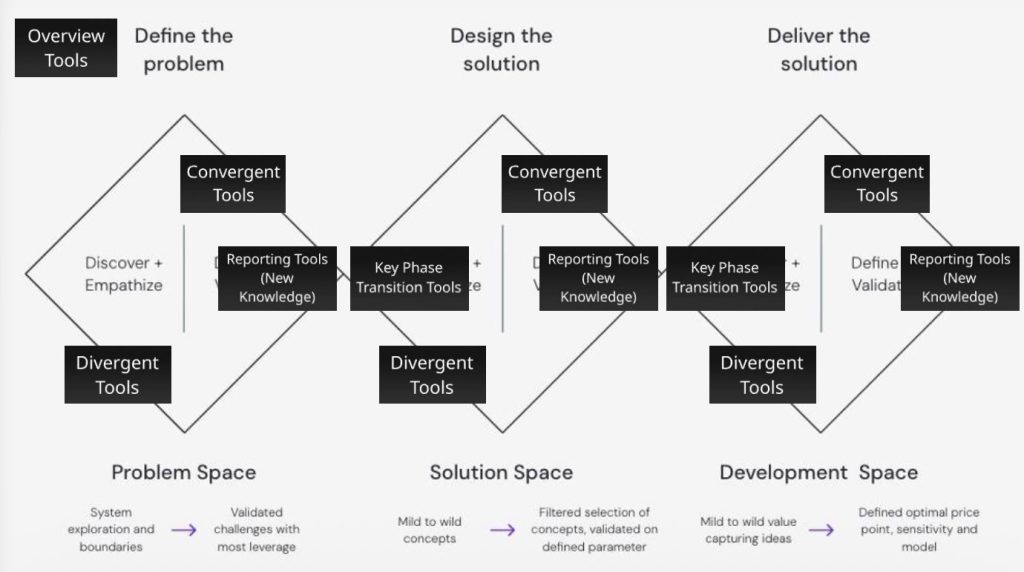
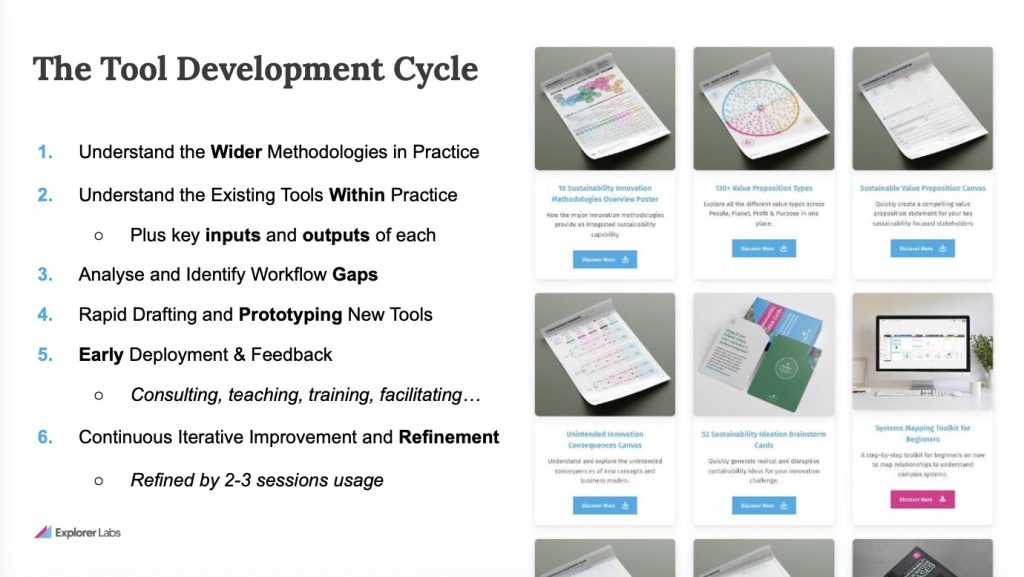
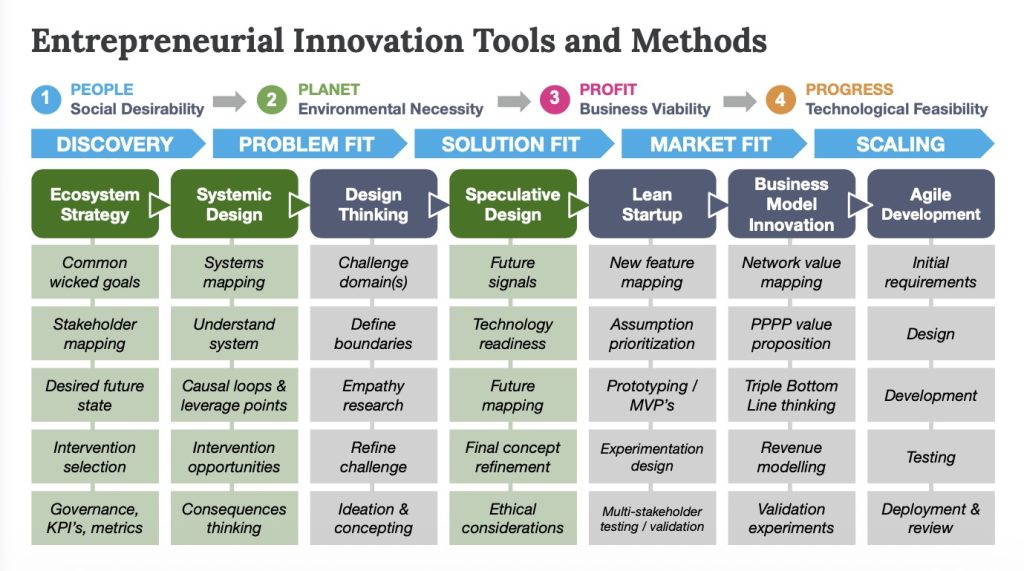
A huge thank you to Erkko Autio, Henrik Berglund, and Christoph Seckler for the invite and for fostering such a vital bridge between academic theory and entrepreneurial practice.
It’s clearer than ever: the firms that build the best “innovation architecture” are the ones that will lead through complexity.
Build Your Strategic Capability with Explorer Labs
At Explorer Labs, we help firms understand complex systems to drive meaningful interventions. We believe that the right tools don’t just solve problems—they change the way an organisation learns.
If you are looking to evolve your innovation architecture, we offer several ways to engage:
- Custom Tool Design: We partner with firms to co-develop proprietary toolsets and workflows tailored to your specific strategic challenges.
- High-Stakes Innovation Sprints: We lead intensive, tool-driven programmes—in-person or via Miro—designed to tackle “Wicked Problems” and deliver actionable business design outcomes.
- Access Our Library: Explore our repository of over 100+ proven innovation tools, from Sustainability Cards to Deep Tech venturing frameworks.


Let’s talk!
Reach out below
We’ll discuss your specific sustainable business-innovation challenges and what to do about them

Mike Pinder is a cross-industry business and innovation consultant, thought leader, author, senior trainer, lecturer and international keynote speaker. He’s driven by using innovation to leave the World a better place than we found it. Mike is a co-founder of Wicked Acceleration Labs (an industry-academia research lab aimed at tackling complex Systemic and Wicked Problems), Member of Board of Advisors at Global Innovation Institute (GInI), & Honorary Practice Fellow at Imperial College London Business School.
Mike consults and leads across Innovation Strategy, Systemic Design, Systems Thinking, Design Thinking, Lean Start-up and Entrepreneurship, Business Model Innovation in both B2B and B2C. He guides, trains and facilitates: C-Level Innovation Strategy, AI Enhanced Innovation Process and Methods, Tool Development and Design, Innovation Accelerators, Innovation Capability Training Programs, Academic Research, Executive Education (Exec Ed), University Program Design, Intrapreneurship, Digital Transformation, Design Sprints and more.